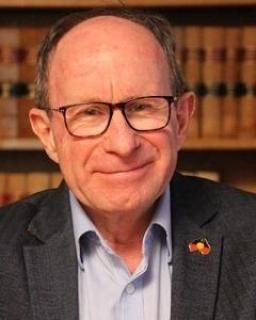
Position: Honorary Research Fellow
School and/or Centres: Centre for Indigenous Policy Research
Email: edward.wensing@anu.edu.au
Phone: 02 6125 0092
Qualification: PhD, BA (Hons), (Life Fellow) MPIA, FHEA
Dr Ed Wensing is an experienced land use planner, policy analyst and academic. Ed has technical qualifications in cartography, surveying and civil engineering, a Bachelor of Urban Geography with Honours in Political Science from ANU. Ed recently completed his PhD through the National centre for Indigenous Studies. His research topic was Land Justice for Indigenous Australians.
Ed has worked in government, the private sector, non-government organisations, and professional associations and in academia. Ed has also engaged in teaching/research at various universities including the Australian National University, James Cook University, University of Canberra, Griffith University, University of Western Sydney and University of New South Wales.
Ed has extensive knowledge and understanding of Commonwealth/State/Territory laws relating to land administration, land use and environmental planning, Aboriginal land rights, native title rights and interests, environmental protection, natural resource management, cultural heritage protection and local government in every jurisdiction in Australia. His primary research interests are in equity and land justice for Indigenous Australians, as well as urban and regional planning, local government and human rights.